Interview & Foto Sophie Ströbitzer
Why TU?
Patrick is in his final semester of his bachelor’s degree and is on the verge of entering the workforce. He reflects on his university years, which were not only marked by changes in studies and career paths but also by his time in the TU Wien Space Team. There, the 24-year-old served as president for two years, attended international events with his team, and not only met interesting people but also developed numerous skills.
How and when did you come to TU?
Patrick: I came to TU Wien at the age of 19 and initially chose technical mathematics. However, I quickly realized that it wasn‘t the right fit for me and switched to Computer Engineering. I used to think that choosing a field of study was the most important decision in life, but I didn‘t actually know where I wanted to go professionally.
And what about career aspirations and interests now?
Patrick: I‘m now at the end of my bachelor‘s studies and am currently looking for a part-time job. However, I‘ve actually decided against the technical path and aim to work in project management in the future. Long-term, I‘d like to advance into a leadership position and support teams in achieving big goals. While my studies provided me with important technical intuition that will help me throughout my life, I want to work with people.
What inspired you to transition into project management?
Patrick: My involvement in the TU Wien Space Team was crucial for this shift. I joined the team at the beginning of my studies and had the opportunity to work on interdisciplinary projects at first in a technical roll and eventually lead the team. There I learned a lot about rapid prototyping and manufacturing and later how to coordinate large teams, strategic decision making, stakeholder management but also financing, legal matters, and how to communicate effectively. My favorite part was to showcase the work of the Space Team to different audiences like in front of a room full of the managing directors of aerospace companies, people from NASA, the director general of ESA, professors and the rector‘s office, and even a theatre audience. These experiences showed me that I see my strengths in team and project management. My goal is to bridge the gap between technology and team leadership to create value for the company.
As President, how did you manage to motivate people to join the Space Team?
Patrick: The projects of the Space Team are simply very exciting, and they sell themselves, so to speak. Building and testing rocket engines, a satellite that will go to orbit soon, a hydrogen plane that will be able to cross Austria, I mean what‘s more awesome? Additionally, the atmosphere within the team is incredibly cool, and you constantly learn and pass on your knowledge to new team members the next day. I found it important to foster the enthusiasm and engagement of team members and create a positive team culture.
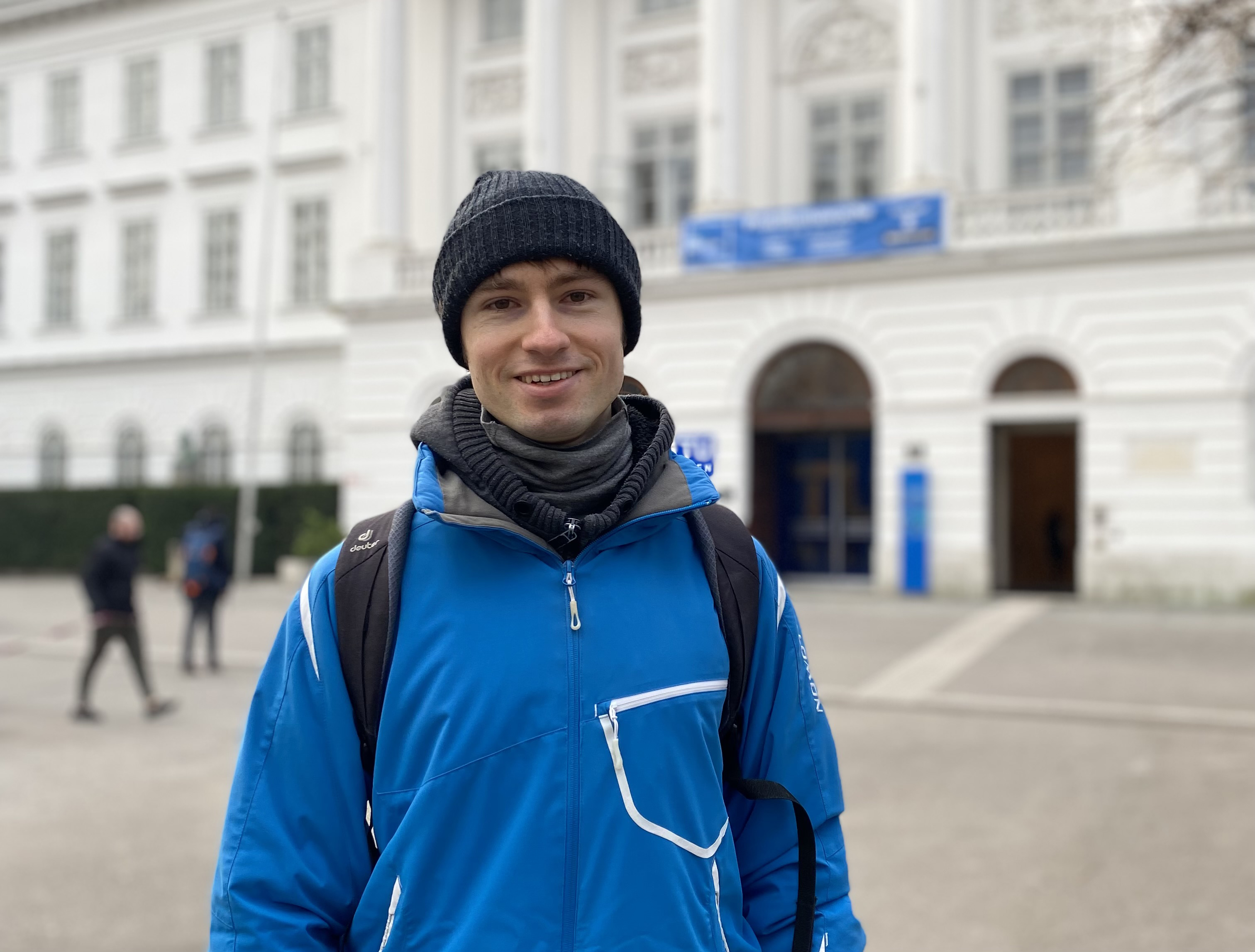
Patrick Enzenberger, 24 … is studying Computer Engineering in his last Bachelor’s semester at the TU Wien. Additionally, he is part of the TU Wien Space Team and has even served as their president in the past.
Why did you decide to step down from the position of president?
Patrick: The role of president requires a lot of time and commitment. After a while, I felt that it was time to make room for new ideas and leaders. I believe in the importance of novel approaches and fresh perspectives within an organization.
What skills have you gained from your studies at TU that are helping you in your job search now?
Patrick: This is the question that I am currently asking myself as part of my job search, and I have already exchanged ideas with the TU Career Center. In addition to technical knowledge in the fields of technology and informatics and technical intuition in general, I have definitely learned many soft skills such as teamwork, communication, and problem-solving.
You have also completed internships in various companies; how did that go for you?
Patrick: It was interesting to learn about the work style and culture in different companies. I had the opportunity to work in two different companies, each belonging to different industries and positions. An essential aspect for me was to clarify in advance what specific tasks awaited me there. I succeeded once and failed once. In a position where I performed tasks that did not meet my expectations, I didn‘t feel particularly comfortable. However, I learned from the experience for my next internship and ultimately had a great and educational time.
Do you have any advice for TU freshmen or soon-to-be graduates like yourself?
Patrick: In the first semester, it‘s crucial to establish a solid foundation for the rest of your studies. Avoid distractions, actively make contacts, and find your study groups. Later on, I definitely recommend looking into activities outside of studying. TU offers a very diverse range of activities beyond lectures. In associations, you can meet new people and perhaps discover unexpected strengths, as was the case for me. Personally, I would of course highly recommend the Space Team to all interested students. I wouldn‘t want to miss the time and experiences there.